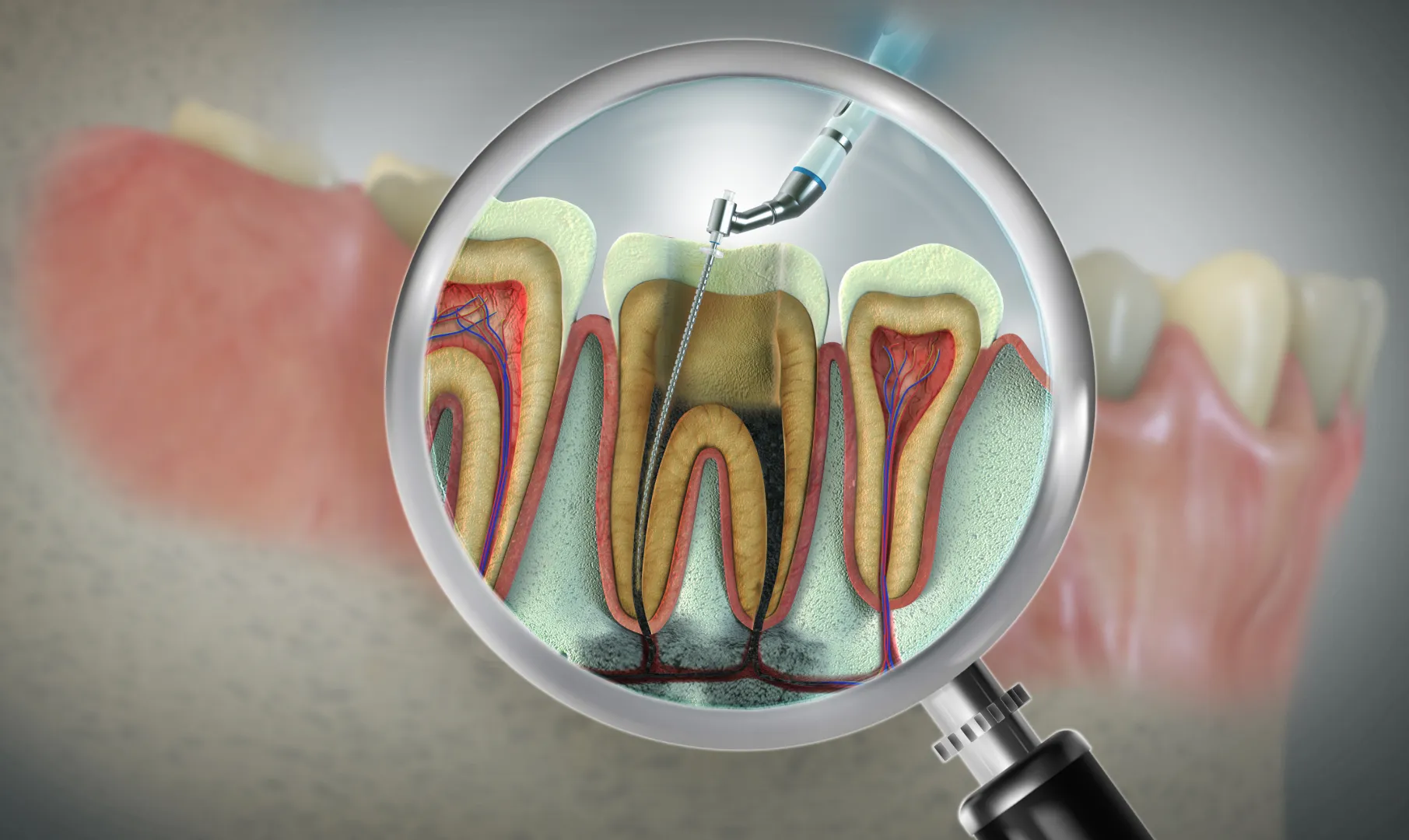
What actually happens during a root canal?
A root canal removes infected or inflamed tissue from inside a tooth, then seals and protects it with a filling and, in most cases, a crown. The procedure itself is performed under local anesthesia and is designed to relieve the pain caused by the infection — not create new pain. Most patients are surprised to learn that the discomfort they associate with “needing a root canal” comes from the infection itself, and largely resolves once treatment is complete.
Here’s what to expect at each stage if Dr. Susana Moncada recommends root canal therapy for you.

Why a Root Canal Becomes Necessary
Inside every tooth is a soft tissue called pulp, which contains nerves and blood vessels. When pulp becomes infected — usually from deep decay, a cracked tooth, or repeated dental procedures on the same tooth — it can’t heal on its own. Left untreated, the infection can spread to the bone around the tooth root and lead to a more serious abscess.
Common signs the pulp may be infected include:
- Persistent or throbbing tooth pain
- Sensitivity to hot or cold that lingers after the stimulus is removed
- Swelling or tenderness in the gum near a specific tooth
- Discoloration of the tooth
- A recurring pimple-like bump on the gum
Before the Procedure
Dr. Moncada starts with a digital X-ray to confirm the extent of the infection and check the shape of the tooth’s root canals. Local anesthesia is administered before any work begins, so the area is fully numb throughout treatment.
During the Procedure
The actual steps are straightforward:
- A small opening is made in the top of the tooth to access the infected pulp
- The infected tissue is carefully removed from the canal(s)
- The space is cleaned, disinfected, and shaped
- The canal is filled with a biocompatible material to seal it permanently
- A temporary or permanent filling is placed to close the access point
Most root canals are completed in one to two visits, depending on the complexity of the tooth’s root structure.
After the Procedure
Mild soreness for a few days is normal and typically manageable with over-the-counter pain relief. Because a tooth that’s had a root canal is more brittle than before, Dr. Moncada will usually recommend a dental crown to protect it from fracturing under normal chewing pressure.
What to expect in the days following treatment:
- Mild tenderness when chewing on that side, improving within a few days
- Some sensitivity to pressure, which should ease gradually
- A follow-up visit to place a permanent crown if a temporary filling was used
When to Call Your Dentist After a Root Canal
Most recovery is uneventful, but contact the office if you notice:
- Pain that worsens rather than improves after a few days
- Visible swelling in the face or gum
- A return of the original symptoms after the area initially felt better
Think You Might Need a Root Canal?
Tooth pain that lingers, throbs, or worsens with temperature shouldn’t wait. The earlier an infected tooth is treated, the more likely it can be saved with a root canal instead of an extraction. Dr. Susana Moncada and her team provide gentle, efficient root canal therapy for patients throughout MetroWest, Windermere, Gotha, Ocoee, and Dr. Phillips, in a fully bilingual (English/Spanish) practice.
Contact us online or call (407) 294-1132 to schedule an appointment at our Piazza Grande Ave office in Orlando.